Manufacturing creates value, but it also creates scrap.
Additionally, Machining operations, fabrication, cutting, maintenance and equipment replacement can produce significant amounts of recyclable material.
For factories in Pune, effective industrial scrap management is therefore not just a housekeeping task. Consequently, it can become an important part of operational organization.
Businesses searching for an industrial scrap buyer in Pune should understand what happens before, during and after scrap collection.
What Is Industrial Scrap?
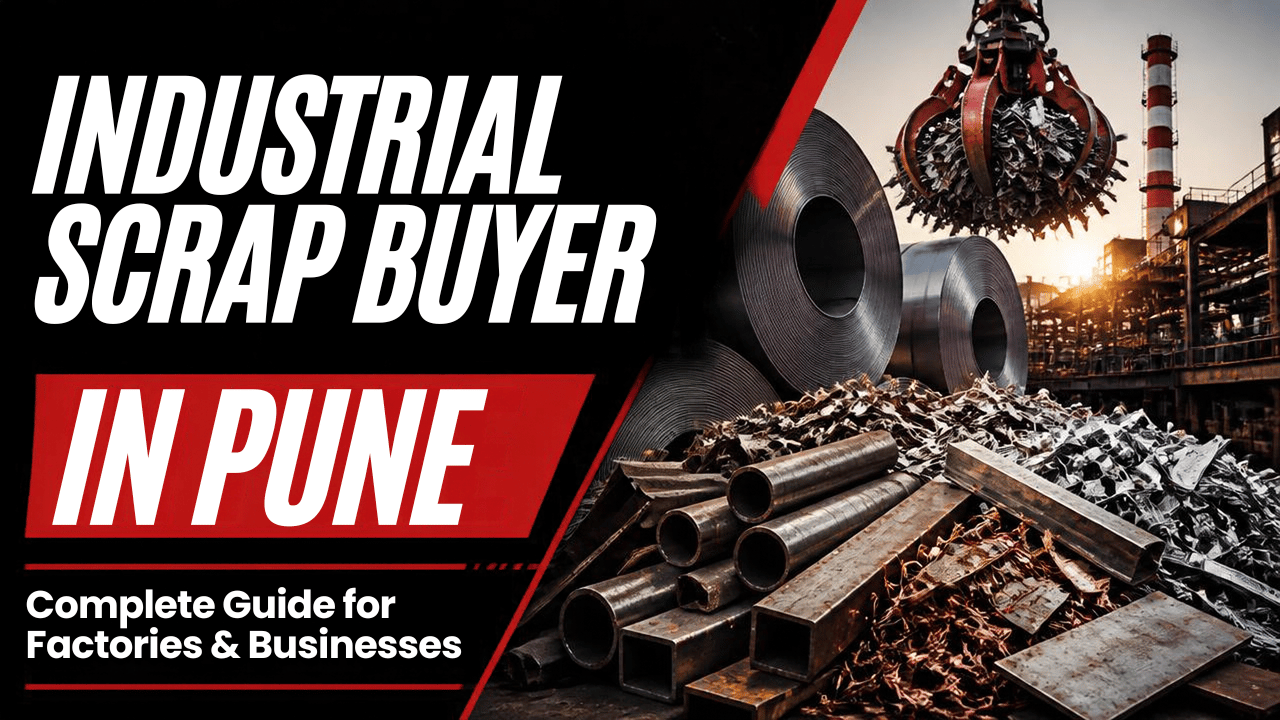
Moreover, industrial scrap is material generated from manufacturing, engineering, fabrication, maintenance and other commercial or industrial processes.
It can include:
- MS scrap
- Steel scrap
- Stainless steel
- Aluminium
- Copper
- Brass
- Metal turnings
- Machinery components
- Fabrication offcuts
- Electrical components
- Obsolete equipment
- Other recyclable industrial material
The exact categories depend on the industry.
Where Does Industrial Scrap Come From?
Manufacturing
Production processes can leave metal offcuts, rejected components and machining remnants.
Engineering Workshops
Turning, milling, drilling and fabrication can generate metal scrap regularly.
Construction
Renovation and construction work can create structural steel, aluminium and other metal scrap.
Warehouses
Old racks, equipment, packaging components and damaged material may eventually become scrap.
Maintenance Departments
Replacement of motors, electrical components, machinery parts and fixtures can create recyclable scrap.
Why Industrial Scrap Should Be Segregated
One of the biggest mistakes is storing every material together.
A better method is source segregation.
For example:
Area A: Iron and MS
Area B: Stainless steel
Area C: Aluminium
Area D: Copper
Area E: Brass
Area F: Electronic equipment
This helps businesses know what material they have and makes collection more organized.
The Industrial Scrap Collection Process
A typical commercial process may involve:
Step 1 — Identify the Material
Determine the type of scrap and where it came from.
Step 2 — Estimate Quantity
Even an approximate quantity is useful when requesting a collection.
Step 3 — Share Photographs
Photographs can help a buyer understand the material before a physical visit.
Step 4 — Site Assessment
For larger lots, the buyer may need to inspect the material and understand loading requirements.
Step 5 — Weighing
The material is weighed using the agreed process.
Step 6 — Valuation
The material is valued according to category, quality, quantity and applicable market conditions.
Step 7 — Collection
Material is loaded and removed from the customer’s premises according to the agreed arrangement.
Why Businesses Should Not Let Scrap Accumulate
Industrial scrap can consume valuable floor space.
In a factory, every square metre can matter.
An organized collection system can help:
- Reduce clutter
- Improve storage
- Keep production areas cleaner
- Reduce mixed-material inventory
- Improve material tracking
- Make future collections easier
Industrial Areas in the Pune Region
Pune and the surrounding region have major manufacturing and industrial activity, including areas around Bhosari, Chakan, Pimpri-Chinchwad and other industrial clusters.
Different businesses will generate different scrap streams.
An automotive supplier may produce machining scrap.
A fabrication unit may generate steel offcuts.
An electrical company may generate cable and copper scrap.
A warehouse may generate old equipment and metal fixtures.
A good scrap-management strategy should therefore be customized according to the business.
What Businesses Should Ask an Industrial Scrap Buyer
Before starting a regular relationship, ask:
Which materials do you accept?
How is the material classified?
How is weighing performed?
What documentation is available?
How are loading and transportation handled?
How does payment work?
Can recurring pickups be scheduled?
These questions help establish a clear operating process.
How to Create a Scrap Management System
Businesses generating significant scrap can create a simple internal system.
Maintain a monthly record containing:
| Date | Material | Quantity | Department | Buyer | Value |
|---|
This helps management identify:
- Which department creates the most scrap
- Which materials have the greatest recovery value
- How frequently collections are required
- How much storage space is being used
Industrial Scrap Is a Resource
The word “scrap” often makes material sound worthless.
But many scrap streams contain valuable recoverable materials.
Once separated and processed correctly, these materials can re-enter manufacturing and recycling supply chains.
That makes responsible scrap management part of the broader circular economy.
Conclusion
Factories and businesses need more than a place to throw away unwanted material.
They need an organized process for identifying, segregating, storing and collecting scrap.
For companies searching for an industrial scrap buyer in Pune, Poona Scrap Centre can use educational content like this to explain the process while making it easy for businesses to request a quotation or collection.
FAQs
What is industrial scrap?
Industrial scrap includes recyclable materials generated through manufacturing, engineering, fabrication, maintenance and commercial operations.
Can factories schedule recurring scrap pickups?
This depends on the buyer and the business arrangement. Large-volume customers can discuss scheduled collection requirements.
Should metal turnings be kept separately?
Where material identification and handling require it, machining turnings should be segregated according to material.
What information should I provide when requesting a quote?
Material type, approximate quantity, photographs, location and whether materials are sorted are useful starting points.
Which Pune businesses generate industrial scrap?
Manufacturing, engineering, fabrication, automotive, construction, warehouse and maintenance operations can all generate industrial scrap.