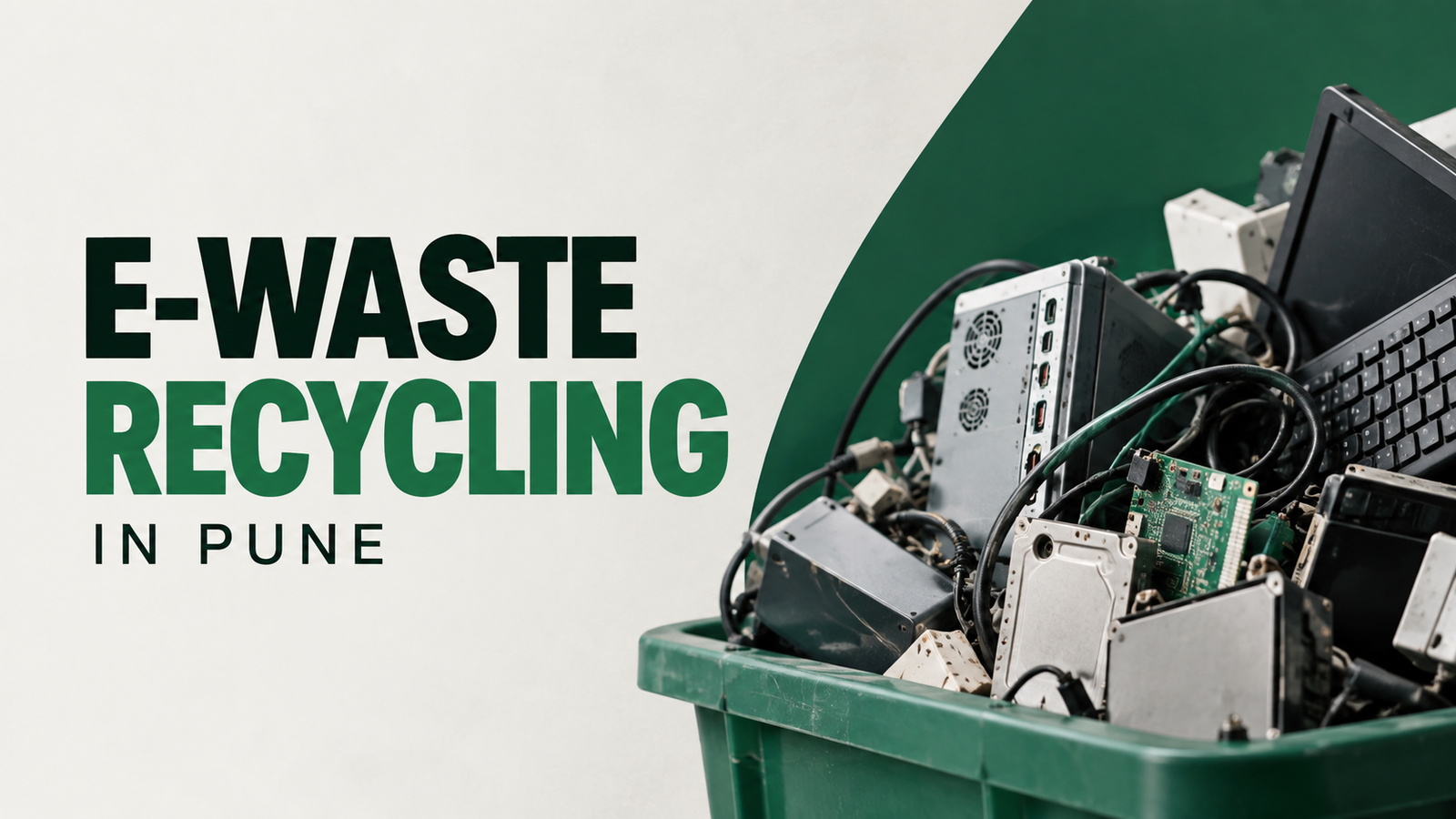
E-Waste Recycling in Pune: Safe Disposal & Recycling Guide for Businesses
Computers, laptops, printers, networking equipment, servers, televisions and other electronic products eventually reach the end of their useful life.
When electronic equipment becomes obsolete, it should not simply be treated like ordinary household waste.
India’s E-Waste (Management) Rules, 2022 regulate the management of covered electrical and electronic equipment and establish an Extended Producer Responsibility framework involving relevant producers and registered entities.
For Pune businesses, understanding the correct route for electronic scrap is therefore increasingly important.
What Is E-Waste?
E-waste is discarded electrical and electronic equipment and related components that fall within the applicable regulatory framework.
Examples can include:
- Computers
- Laptops
- Printers
- Monitors
- Networking equipment
- Electronic components
- Televisions
- Other covered electrical and electronic equipment
The exact regulatory classification should be checked against the applicable rules and schedules.
Why E-Waste Needs Special Handling
Electronic equipment can contain recoverable materials as well as components that require controlled handling.
CPCB’s framework focuses on environmentally sound management and requires relevant material streams to move through appropriate registered channels.
This is different from simply throwing electronic equipment into ordinary garbage.
E-Waste from Offices
Modern offices can accumulate significant quantities of obsolete equipment:
- Desktop computers
- Laptops
- Printers
- Routers
- Switches
- UPS units
- Monitors
- IT accessories
- Cables
- Electronic peripherals
Instead of storing obsolete equipment indefinitely, businesses can create an asset-disposal process.
E-Waste from Schools and Institutions
Schools, colleges and institutions may also replace computers, projectors, networking equipment and other electronics.
A planned collection system helps institutions keep obsolete equipment separate from general waste.
What Does the E-Waste Management Process Look Like?
A responsible process may include:
1. Identification
Identify equipment that is obsolete, damaged or no longer required.
2. Segregation
Keep electronic equipment separate from ordinary scrap and municipal waste.
3. Data Security
Businesses should remove or securely destroy sensitive data before handing over old computers, storage drives or other equipment.
4. Collection
Arrange collection through an appropriate service provider or channel.
5. Authorized Processing
Under India’s E-Waste Management framework, relevant entities such as producers, recyclers and refurbishers are subject to registration requirements and the applicable EPR system.
6. Material Recovery
Appropriate recycling processes can recover useful materials.
CPCB’s EPR certificate framework recognizes recovery of key metals including gold, copper, aluminium and iron from e-waste.
What About Data on Old Computers?
This is one of the most overlooked issues.
Before disposing of:
- Hard drives
- SSDs
- Laptops
- Servers
- Storage devices
businesses should follow an appropriate data sanitization or destruction policy.
Deleting a file manually is not necessarily the same as securely sanitizing a storage device.
Companies handling sensitive customer, employee or business information should have an internal IT disposal procedure.
What Should Businesses Ask an E-Waste Service Provider?
Ask:
- What type of e-waste do you accept?
- Are the relevant entities appropriately registered?
- Where is the material processed?
- What documentation is provided?
- How is data-bearing equipment handled?
- How are non-recyclable fractions managed?
CPCB’s guidance states that registered entities and appropriate downstream channels play a role in e-waste collection and processing, and materials not recycled at one facility may need to be sent to respective registered recyclers.
Don’t Mix Batteries With General Metal Scrap
Batteries are governed under a separate regulatory framework. India’s Battery Waste Management Rules cover battery waste and use an EPR-based framework.
Therefore, businesses should identify batteries separately rather than automatically treating them like ordinary metal scrap.
E-Waste and the Circular Economy
Electronic products contain materials that can potentially be recovered and reused in industrial supply chains.
Responsible e-waste recycling therefore has two important dimensions:
Environmental management: reducing uncontrolled disposal.
Material recovery: returning useful materials to productive use.
Conclusion
For anyone searching for e-waste recycling in Pune, the most important principle is simple: electronic waste should be handled through appropriate channels rather than mixed with ordinary garbage.
Businesses should also consider data security, documentation and applicable regulatory requirements.
For Poona Scrap Centre, an e-waste service page should clearly distinguish ordinary metal scrap from regulated e-waste and direct customers toward the appropriate compliant process.
FAQs
Can old computers be sold as normal metal scrap?
Electronic equipment should be handled according to the applicable e-waste framework and appropriate collection/recycling channels.
What happens to old computers during recycling?
Equipment can be dismantled and processed so that recoverable materials can be separated and sent through appropriate recycling routes.
Should data be deleted before recycling a laptop?
Yes. Businesses should follow a proper data-sanitization procedure before handing over data-bearing equipment.
Are batteries part of e-waste?
Battery waste has its own regulatory framework, so batteries should be managed appropriately rather than automatically mixing them with general scrap.
Does CPCB regulate e-waste recycling?
Yes. The E-Waste (Management) Rules, 2022 operate through an EPR framework administered through the CPCB e-waste system.